
The business nomad and redefining modern work
The idea of building a career while hopping continents might of sounded like a pipe dream a decade ago, but with the rapid changes bought on by technological advancements and the shifting of the tradition 9 – 5 – it’s now a legitimate lifestyle. The business nomad—an evolution of the digital nomad—is no longer a fringe figure, but a growing archetype in the global workforce.
With remote and hybrid working arrangements becoming more du jour post pandemic lockdowns, more professionals are rejecting the constraints of cubicles and commutes in favour of co-working spaces in Bali, calls from cafés in Lisbon, and client meetings across time zones.
It’s so popular that a study conducted by YouGov in 2024 revealed that almost one in three (29%) Australians have previously worked as a digital nomad, and of those who hadn’t worked this way previously, 41% indicated that they would consider this lifestyle.
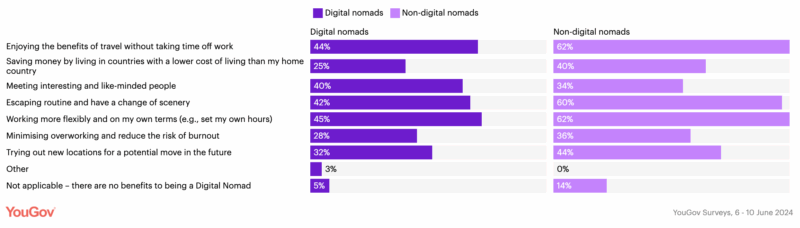
The main draw cards for this sort of lifestyle includes flexibility and working on your terms (45%), getting to travel without taking holidays (44%), and escaping routine and a change of scenery (42%).

The same study revealed that the top three destinations to work from were New Zealand (50%), Japan (41%), and Singapore (34%).
According to another survey of over 1,400 Australian workers conducted by ADP, nearly two in 10 workers (18%) believe that “within five years, it will be the norm in their industry to have the ability to work remotely from anywhere in the world.” The study also revealed that flexibility of location is cited by one in six workers (18%) as an important factor to them in a job.
So how does the business nomad differ from a digital nomad?
Unlike traditional digital nomads who may freelance or do gig work while traveling, business nomads are often entrepreneurs, solopreneurs, or remote-first team leaders. They’re leveraging location independence to grow real businesses—not just fund a lifestyle, but design a new one.
They include consultants and coaches serving international clients, content creators building personal brands, and remote professionals developing side hustles into companies.
A convergence of different global trends helped to bring about the rise of this movement, including:
Remote work normalisation: Post-2020, remote and hybrid work became standard. Companies dropped location requirements, and tools like Zoom, Notion, and Slack made it seamless.
Digital nomad visas: Over 50 countries now offer visas catering to remote workers—from Estonia to Brazil—often with low tax rates and minimal bureaucracy.
Solo entrepreneurship boom: Platforms like Gumroad, Substack, and Shopify enable creators and founders to build, launch, and monetise products solo.
Cultural acceptance: It’s now seen as not only a viable vocation but a cool one – to live from a backpack and run a six-figure business on the road. Gen Z and millennials especially are leading the charge.
While hastened by the pandemic, business nomadism isn’t a flash in the pan novelty—it reflects deeper shifts in how people want to live and work. Having greater autonomy and freedom around how and where you work is growing in popularity the world over. Salary is no longer the bottom line for many workers, who prioritise lifestyle over pay cheque.
According to MBO Partners, the digital nomad population globally increased from approximately 10.9 million in 2020 to 35 million in 2024. So this is one segment that is only set to grow.



