
How the ‘Joyconomy’ and micro-rituals are redefining customer loyalty
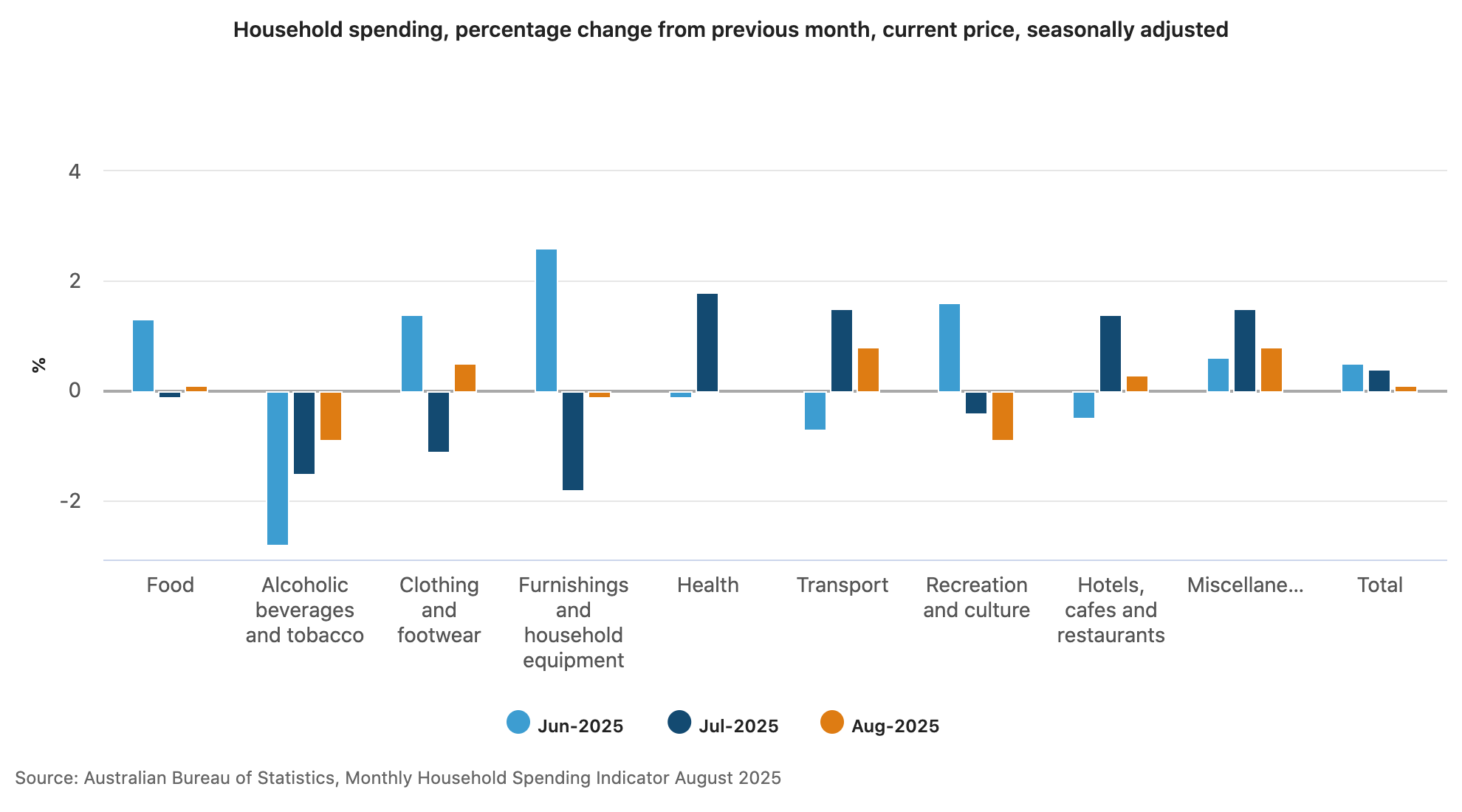
Despite uncertainty caused by the housing and cost of living crisis, household spending has been on the rise in Australia over the May – August 2025 period, with August figures sitting 5.0% higher than the same time last year (2024).
Five of the nine spending categories rose in the most recent data (August 2025), across transport, food, clothing and footwear, hotels, cafes and restaurants, and miscellaneous goods and services. The largest increases were in transport (+0.8%, miscellaneous goods and services (+0.8%, and clothing and footwear (+0.5%).

In a 2023 report by McKinsey & Company, 44% of consumers around the world (and 60% of Gen Zers and millennials) say that they plan to splurge, particularly on purchases that are experiential or provide immediate gratification, like restaurant experiences or travel.
Which brings us the phenomena of the Joyconomy – a marketplace where emotional uplift and small moments of pleasure are the new currency. As people navigate stress, uncertainty, and digital overload, joy has become both a balm and a buying motive.
In this new landscape, brands aren’t just selling products; they’re selling feelings.
Despite widespread talk of economic restraint, consumers continue to trade down on essentials so they can trade up on joy. McKinsey’s latest ConsumerWise research found that consumers are reallocating budgets from basics to experiences and “joy-sparking” indulgences.
So how can businesses tap into the joyconomy wave? By tapping into micro-rituals – the small, intentional acts that structure our emotional lives. The way we sip coffee before checking email, roll a beer bottle before opening it, or light a candle before reading. These seemingly mundane gestures anchor us in routine and meaning – and act as a powerful balm to the uncertainty in the world.
For brands, understanding and enabling these micro-rituals transforms ordinary moments into something more powerful.
A joint WARC and MSQ Partners study found that:
•72% of consumers already incorporate brands into their rituals, and
•70% are open to creating new ones.
And the most telling: 39% feel more favourably toward a brand once it becomes part of a personal ritual.
Rituals provide structure, escape, and control—three emotional needs heightened by modern instability.
So how can your brand incorporate ritual into the use of your product? Through market research. By blending ethnography, behavioural analytics, and emotional testing, researchers can identify where joy lives in a customer journey — and how to sustain it.
It is only through this form of research that authentic and joyful ritual can be supported, as customers are savvy to marketing theatre and distrustful of manufactured attempts at building routine.
Square Holes has worked across sectors to understand how consumers integrate services and products into their routines and rituals – creating data backed understanding of how different brands and organisations make them feel.
And one of the the big learnings from this work is that loyalty is no longer just about points, discounts, or convenience. It’s about how a brand fits into the emotional landscape of consumers lives.
As technology grows more personal — from wearable mood sensors to AI companions — understanding micro-rituals and emotional resonance will separate the brands that feel human from those that feel systematic.



